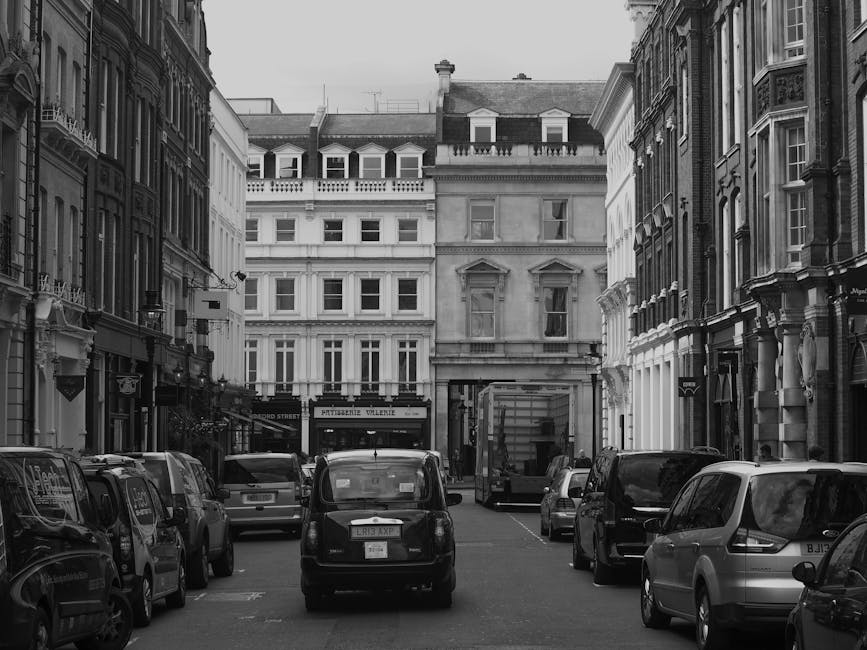
EC1R moves in Farringdon: parking and permit checklist
If you are moving in EC1R, the parking question can become the whole day's problem if you leave it too late. One van in the wrong bay, one permit missing, one access restriction you did not spot on the map, and suddenly a straightforward move turns into a stressful scramble. This guide to EC1R moves in Farringdon: parking and permit checklist is here to help you avoid exactly that.
Farringdon is busy, tight on space, and rarely forgiving to guesswork. Whether you are moving out of a flat, shifting office equipment, or handling a same-day move with a removal van, the parking and permit side needs as much attention as the boxes. Below you will find a practical, local-first checklist that covers what to look for, how to plan, what to ask, and where people usually get caught out. And yes, it can be a lot cleaner and calmer than it first looks.
If you want extra help with the move itself, you may also find our guides on making a house move less stressful, packing successfully for a move, and turning a move-out checklist into a cleaning plan useful alongside this one.
Table of Contents
- Why EC1R moves in Farringdon: parking and permit checklist matters
- How EC1R moves in Farringdon: parking and permit checklist works
- Key benefits and practical advantages
- Who this is for and when it makes sense
- Step-by-step guidance
- Expert tips for better results
- Common mistakes to avoid
- Tools, resources and recommendations
- Law, compliance, standards, and best practice
- Options, methods, or comparison table
- Case study or real-world example
- Practical checklist
- Conclusion
- Frequently asked questions
Why EC1R moves in Farringdon: parking and permit checklist Matters
EC1R sits in one of those London pockets where the street scene changes fast: narrow roads, loading pressure, cycle lanes, resident bays, and plenty of foot traffic. In practice, that means parking is not just a minor detail. It can decide whether your move starts smoothly or begins with delays, extra walking distance, and avoidable tension with neighbours or traffic wardens.
The reason this matters is simple. Removal work needs access. A van needs a legal place to stop, enough room to load safely, and ideally a route that avoids repeated shuffling. If your vehicle cannot park close to the entrance, every item takes longer to move. A sofa suddenly becomes a two-person carry across a busy pavement. A box that should take 30 seconds becomes a small expedition. Truth be told, that is where energy disappears.
Parking and permit planning also protects other parts of the move. It reduces the chance of rushed handling, which matters if you are moving furniture, electronics, or anything fragile. It also helps if you have a flat with awkward access, a basement, or a building where the lift is not reliable. For those situations, a little parking certainty can make the day feel half as hard.
There is a wider benefit too: good planning helps you avoid awkward last-minute calls, complaints from neighbours, and avoidable cost from extra waiting time. If you have ever seen a mover circle the block in circles while somebody runs downstairs to "just check if we can stop here for a second", you will know the mood drops fast. No one wants that on moving day.
For local support, many residents compare options across removals in Farringdon, man with a van services, and flat removals in Farringdon depending on the size and access conditions of the move.
How EC1R moves in Farringdon: parking and permit checklist Works
At a basic level, the process is about matching your move to the parking rules and access conditions on your exact street. EC1R is not a one-size-fits-all zone. One side road may allow brief loading, another may sit under stricter controls, and a third may have conditions that change by time of day. That means you need to check the specific location rather than assume the whole area behaves the same way.
Most moves will involve a few moving parts:
- checking whether the van can stop legally close to the property;
- working out if a permit, dispensation, or loading arrangement is needed;
- confirming time limits and bay restrictions;
- coordinating building access, lift bookings, or concierge arrangements;
- planning how long loading and unloading will realistically take;
- making sure the vehicle size suits the street and turning space.
The key point is that parking planning should happen before move day, not on the day. If you are using a man and van in Farringdon or booking a larger removal van, the access plan should be part of the booking conversation. A good mover will ask about loading access, stairs, bay restrictions, and any building rules. If they do not ask, you should bring it up yourself.
For some properties, the real challenge is not parking as such, but the combination of parking plus access. A van can park nearby, but the walkway may be narrow, or a front door may open straight onto a busy pavement. That is where preparation matters. Our local article on Cowcross Street flat access tips is a good example of how small route details can change the feel of a move.
Key Benefits and Practical Advantages
A careful parking and permit checklist does more than avoid fines. It gives the whole move a better shape from the start. That sounds obvious, but in the middle of moving week people often focus on boxes and forget the street outside the front door, which is where the real bottlenecks happen.
First, it saves time. If the van can park legally and close enough to the property, loading and unloading are quicker. Less walking, fewer pauses, less repositioning. Time saved here tends to ripple through the rest of the day.
Second, it reduces stress. Nobody enjoys watching a driver hunt for a safe place to stop while you stand on the kerb holding a lamp and wondering what to do with it. Good planning removes that uncertainty.
Third, it supports safer handling. Shorter distances and fewer awkward transfers mean less chance of a dropped item, a strained back, or a damaged wall. That is especially important for heavier or awkward furniture. If you are moving larger pieces, our guide to furniture removals in Farringdon may help you think through the handling side as well.
Fourth, it helps avoid disruption. Parking without a plan can annoy neighbours, block access for other road users, or cause unnecessary conflict with building management. A clean, polite approach usually goes a long way.
Fifth, it can save money. Delays cost time, and time can cost money if you have booked helpers, a crew, or a vehicle by the hour. A permit checklist is not glamorous, but it is often the cheapest insurance you can get for a move.
Expert summary: In EC1R, the best moving day is usually the one where parking has already been solved before the first box leaves the hall. Everything else becomes much easier after that.
Who This Is For and When It Makes Sense
This checklist is useful for almost anyone moving in or out of EC1R, but it is especially valuable if your move involves limited street space, timed access, or multiple stops. In practical terms, it is most relevant for:
- flat moves with stair access or no direct driveway;
- house moves where the van needs to sit on a busy street;
- office relocations with equipment, filing, or furniture;
- students moving on tight schedules;
- short-notice or same-day removals in Farringdon where planning time is limited;
- larger furniture moves, including sofas, beds, or specialist items;
- situations where a van will need to wait, not just stop briefly.
If you are in a top-floor flat with no lift, the parking plan becomes even more important because every extra metre adds physical effort. The same goes for office moves, where a building may allow access only at specific times. In those cases, parking is tied directly to scheduling, and you need both to line up.
If you are not sure whether your move is simple enough to do informally, ask yourself: will the vehicle need to stop in a controlled bay, a loading area, or a space with time limits? Will you need to carry items through a shared entrance? Will the road be congested at your preferred time? If the answer to any of those is yes, you probably need a proper parking plan. Easy to say, not always easy to do, but worth it.
Step-by-Step Guidance
Here is the practical sequence we recommend for an EC1R move. It keeps things simple and reduces the chance of missed details.
- Confirm the exact move address. Check the building number, postcode, entrance location, and whether the loading point is on the same street or around the corner. A tiny mapping error can become a big problem in a dense part of Farringdon.
- Check the street's parking restrictions. Look for signs on the actual road, not just the nearest side street. Loading zones, resident bays, pay-by-phone areas, and time-limited restrictions can all differ.
- Ask whether a permit, dispensation, or booking is needed. Some properties need advance notice or permission for loading. If the building has a management office, concierge, or landlord contact, speak to them early.
- Choose a vehicle size that fits the street. A larger van can reduce trips, but a very large van may be harder to position safely on a narrow road. There is a balance here, and it depends on the access.
- Book your moving slot with the parking window in mind. Avoid peak congestion where possible. Early morning often feels calmer, though every street has its own rhythm.
- Reserve a clear loading path. Make sure residents, neighbours, or colleagues know the move is happening. If building rules allow, arrange for the closest practical entrance to stay available.
- Prepare items in advance. Pack, label, and stage boxes so the crew can move quickly once the vehicle is in place. Our packing and boxes service in Farringdon is a useful reference if you want help with this side.
- Keep documents and contacts to hand. Have the building contact, permit details, and driver number available. That one sheet of information can save a lot of back-and-forth.
- Do a quick final street check on the day. Sometimes roadworks, delivery vehicles, or temporary restrictions appear overnight. A quick look before unloading can prevent a small headache turning into a larger one.
A small but important detail: if you are moving delicate items, split your preparation into two tracks. One track is parking and access. The other is protection and wrapping. They matter equally. For example, if you are moving a sofa, this guide on protecting your sofa during storage and transit can be a smart companion read.
Expert Tips for Better Results
There are the obvious things, and then there are the little choices that make the day smoother. These are the ones that tend to matter most in EC1R.
1. Treat the parking bay like part of the move plan, not an afterthought. If your van is arriving at 9 a.m., the bay and access route should be planned before 8.59. Sounds rigid, but it saves everyone a lot of faffing around.
2. Match your vehicle to your load and street. A bigger van is not always better. In a tight Farringdon street, a slightly smaller vehicle that can park properly may be worth more than a larger one that causes delays.
3. Use clear labels if the move involves multiple rooms or floors. The less time the crew spends wondering where things go, the shorter the parking window needs to be.
4. Put the most awkward items near the exit first. Beds, wardrobes, office desks, and large appliances should be dealt with early while energy is still good. If your mattress is included, our article on moving beds and mattresses safely is worth a look.
5. Don't ignore the weather. A light drizzle in London can make loading slower and more slippery than people expect. Wet cardboard, damp steps, and a narrow kerb are not a lovely mix.
6. Build in a small time buffer. Even 15 to 20 minutes can help if the road is busier than expected. That margin often feels invisible until it suddenly saves the day.
7. Think about storage as a pressure valve. If the new place is not ready or if access is awkward, short-term storage can reduce the need to rush. See storage in Farringdon if that might help your schedule.
8. Keep an eye on lifting technique. Parking problems often lead to rushed lifting. That is exactly when people strain themselves. If you like understanding the physical side a bit better, this playful but useful guide on kinetic lifting is a surprising read.
And one more, because it genuinely helps: declutter before you book the van. Less stuff means less time on the pavement, fewer trips to the vehicle, and fewer decisions while the street is busy. Our decluttering tips before moving piece can make that part easier.
Common Mistakes to Avoid
Most parking and permit problems are avoidable. They tend to come from assumptions, not bad luck.
- Assuming the nearest street will be fine. Often it is not. Restrictions can change within a few metres.
- Forgetting to check building rules. Some flats and offices require specific access arrangements, booked lift slots, or advance notice.
- Using the wrong vehicle size. Too small means repeated trips. Too large may make parking or turning difficult.
- Leaving permit checks until the morning of the move. By then, options can be limited. Not ideal, clearly.
- Ignoring loading time. A short stop and a full move are very different things.
- Blocking entrances while "just loading one item." That is how minor friction turns into complaints.
- Not telling neighbours or building management. A simple heads-up can prevent misunderstandings.
- Forgetting about fragile or bulky items. A piano, freezer, or large sofa may require extra space, better parking, or specialist handling.
To be fair, a lot of these mistakes happen because moving day already feels busy. There are keys, boxes, meters, cleaners, inventory lists, and a hundred little decisions. That is exactly why the parking checklist deserves its own attention.
Tools, Resources and Recommendations
You do not need a complicated toolkit to plan a move in EC1R, but a few simple resources can make a big difference.
- Street-view and mapping tools: useful for checking road width, turning points, and entrance position.
- Phone contacts for building management: keep these saved under one clear label, not buried in your messages.
- Printed or digital permit confirmation: if you have permission, have proof ready.
- Labels and tape: helps the move run faster once the van is parked.
- Protective materials: blankets, covers, bubble wrap, and mattress bags, depending on what you are moving.
- Timing notes: write down your access window and parking start time so no one is guessing.
For item protection, the right support matters. If you have furniture or awkward household items, these pages may help you plan more confidently: piano moving best practices, freezer storage guidance, and stress-free house moving advice.
If you are comparing help options, it can also be useful to review the broader services overview and pricing and quotes information before booking. That gives you a better sense of what is included and what needs to be planned separately.
Law, Compliance, Standards, or Best Practice
Parking and permit arrangements in London should always be handled carefully and in line with local rules. The exact requirements can vary depending on the road, borough controls, the time of day, and whether the vehicle is loading, waiting, or parked for longer. Because rules can change, it is wise to confirm details directly with the relevant local authority or building management before the move.
As a practical standard, good movers in EC1R will normally:
- avoid blocking access routes or footways where possible;
- check restrictions before stopping the vehicle;
- respect resident bays, loading bays, and timed restrictions;
- carry out loading safely and without unnecessary obstruction;
- keep documentation available if permission or dispensation has been arranged;
- follow health and safety expectations for lifting, carrying, and vehicle positioning.
If your move involves a shared building, concierge, office block, or managed property, there may also be internal access rules. These are not always legal requirements, but they are still important. Best practice is to treat them seriously because they can affect whether the move starts on time.
For extra reassurance on how a move should be handled safely and professionally, see the company's health and safety policy and insurance and safety information. If you are comparing providers, it is also reasonable to read the terms and conditions so you understand the scope of service, cancellation points, and practical expectations.
Options, Methods, or Comparison Table
There are a few sensible ways to approach parking and permit planning in EC1R. The right one depends on the size of the move, the street, and how much access you have.
| Approach | Best for | Pros | Watch-outs |
|---|---|---|---|
| Pre-booked loading arrangement | Managed buildings, offices, and timed access moves | Clear structure, less uncertainty, better coordination | Needs advance planning and confirmation |
| On-street short-term loading | Smaller flat moves with flexible timing | Convenient, often quicker if restrictions allow it | Must be checked carefully; not suitable everywhere |
| Smaller vehicle with easier access | Narrow streets or awkward turning space | More manoeuvrable, can reduce parking stress | May require more trips |
| Vehicle plus storage support | Moves with timing gaps or staged delivery | Reduces pressure on one move day | Extra coordination needed |
There is no single perfect setup. A compact van might be the smart choice on a tricky street, while a larger van makes sense for a house move with easier access. The best answer is the one that fits your road, not the one that looks best on paper.
Case Study or Real-World Example
Here is a realistic EC1R-style scenario. A couple are moving out of a first-floor flat near Farringdon after four years. They have a sofa, bed, dining table, a few heavy boxes of books, and a freezer that needs careful handling. At first, they assume the van can just wait outside the building for an hour or so. Then they check the street signs and realise the closest bay is time-restricted, and the building entrance sits on a narrow stretch of road with busy morning traffic.
Instead of leaving it to chance, they adjust the plan. They book a smaller vehicle that can stop more easily. They speak to the building manager the week before. They stage the boxes inside the flat the night before. They label the heavier items clearly, and they arrange the sofa and mattress for first load-out so the van is used efficiently. On the day, the team parks legally, loads in sequence, and the move finishes without any awkward waiting around. Not magic. Just planning.
Now compare that with the version where nobody checks the street. The van arrives, circles, someone runs downstairs to look for a space, two neighbours are trying to get past, and everyone starts feeling the clock. The work is the same, but the experience is completely different. That is why parking and permit planning matters so much in this part of London.
Practical Checklist
Use this checklist before your EC1R move. Keep it simple and tick it off line by line.
- Confirm the full move address and postcode.
- Check parking restrictions on the exact street and nearby alternatives.
- Ask whether a permit, dispensation, or booking is needed.
- Speak to building management, concierge, or landlord if relevant.
- Choose a van size that suits both load and access.
- Set a realistic loading/unloading window.
- Plan where the vehicle will stop and how items will be carried.
- Prepare packing materials and labels in advance.
- Protect bulky or fragile items with suitable covers or wrapping.
- Keep permit details, contact numbers, and access instructions ready.
- Notify neighbours or colleagues if the move may affect shared access.
- Re-check the street on the day for temporary restrictions, works, or deliveries.
- Have a backup plan if the preferred bay is unavailable.
If you are juggling multiple moving tasks, remember that decluttering can make this checklist much easier to manage. Fewer items means less loading time, fewer parking pressures, and fewer headaches. Simple, but it works.
Quick takeaway: In EC1R, a successful move is usually won before the van arrives. The parking plan, the permit check, and the access route are the quiet bits that make everything else go smoothly.
Conclusion
EC1R moves in Farringdon are rarely difficult because of one dramatic problem. More often, they are shaped by a collection of little ones: a tight road, a late permit check, a building rule nobody remembered, or a van that was a touch too large for the space. The good news is that these issues are manageable. With the right checklist, they become predictable rather than stressful.
Start with the street. Confirm the parking rules. Speak to the building. Match the van to the access. Keep the crew informed. That combination gives you a much better chance of a calm moving day, and honestly, that calm is worth quite a lot.
If you want help planning the move itself, exploring the right vehicle, or comparing service options, take a look at our local pages for removal services in Farringdon, removal companies in Farringdon, and house removals in Farringdon. A small amount of planning now can save a lot of rushing later, and that is usually the difference between a heavy day and a manageable one.
Get a free quote today and see how much you can save.
Frequently Asked Questions
Do I need a parking permit for a move in EC1R?
It depends on the exact street, the parking bay type, and how long the vehicle needs to stop. Some moves may only need short loading access, while others require advance permission or a permit. Always check the specific location before the day.
Can a removal van stop outside my flat in Farringdon?
Sometimes, but not always. In EC1R, space can be limited and restrictions vary from street to street. The safest approach is to confirm the parking rules and, if necessary, arrange a legal loading spot ahead of time.
How early should I arrange parking for a move?
As early as possible. A few days may be enough for a simple move, but more complex flats or office relocations benefit from earlier planning. The sooner you confirm access, the fewer surprises you will get.
What happens if I cannot get a space near the building?
You may need a backup plan, such as a different loading point, a smaller vehicle, or extra carrying time. In some cases, short-term storage or a staged move can help reduce pressure.
Is a smaller van better for EC1R streets?
Often, yes, if the road is narrow or parking is difficult. But the best vehicle depends on your load, the access route, and how many trips you are willing to make. A smaller van can be easier to place legally and safely.
Do offices in Farringdon need special moving arrangements?
Very often they do. Office moves may involve reception rules, lift bookings, loading windows, or management approval. If you are moving equipment or furniture, speak to the building team early and line everything up.
What should I do if there are roadworks on move day?
Check the route before the move begins and be ready with an alternate parking or unloading plan. Temporary works can change access quickly, so a quick morning check is a sensible habit.
Can I use a loading bay for the entire move?
Only if the local rules and the time limits allow it. Loading bays are often controlled, so do not assume you can use one for as long as you like. Confirm the permitted duration and conditions first.
What are the biggest mistakes people make with move parking?
The big ones are assuming nearby streets are unrestricted, leaving permit checks too late, choosing the wrong vehicle size, and forgetting to confirm building access. These are common, but very avoidable.
How can I make a flat move in EC1R less stressful?
Plan the parking first, pack early, label clearly, and keep bulky items ready to go. If access is awkward, read practical local guides like our Cowcross Street access tips and choose a move time that avoids the busiest traffic where possible.
Should I tell my neighbours about the move?
Yes, if you can. A short note or quick conversation is usually enough. It helps with access, reduces friction in shared hallways, and makes the day feel more considerate all round.
Where can I get help if I am not sure about parking or permits?
Start with the street signs, your building management, and the moving company you are using. If you are comparing support options, pages such as man with a van Farringdon and flat removals in Farringdon can help you decide what level of service fits your situation.
What if I only have a few items to move?
Even a small move can be affected by parking restrictions in EC1R. A sofa, mattress, or a few heavy boxes still need legal stopping space and a safe loading route. Small move, same street problems sometimes.
Moving in Farringdon can feel busy, but with a calm plan and the right checklist, it becomes much more manageable. One clear step at a time, and the whole thing tends to settle into place.